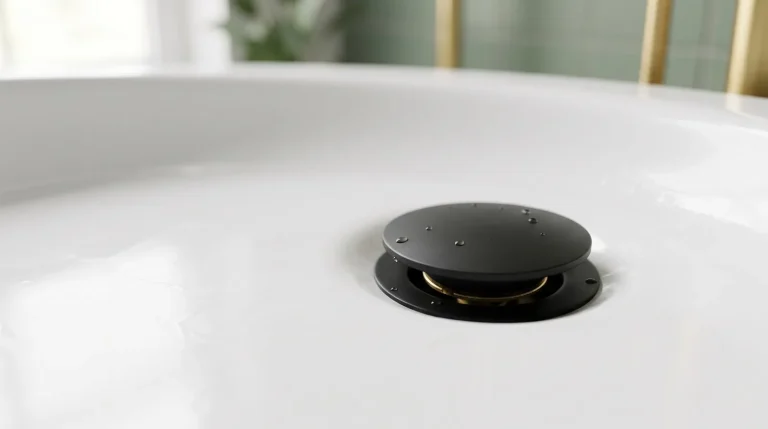
- Floor-level: in the centre of the shower tray, the easiest to maintain.
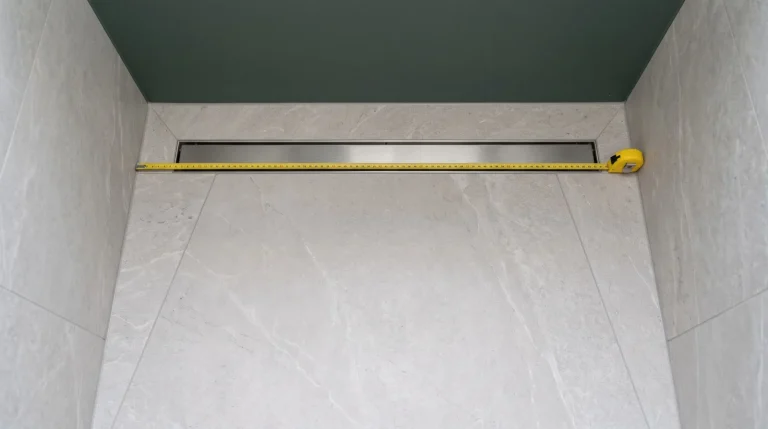
- Wall-side: fitted against the wall, saves space and allows for a single gradient.
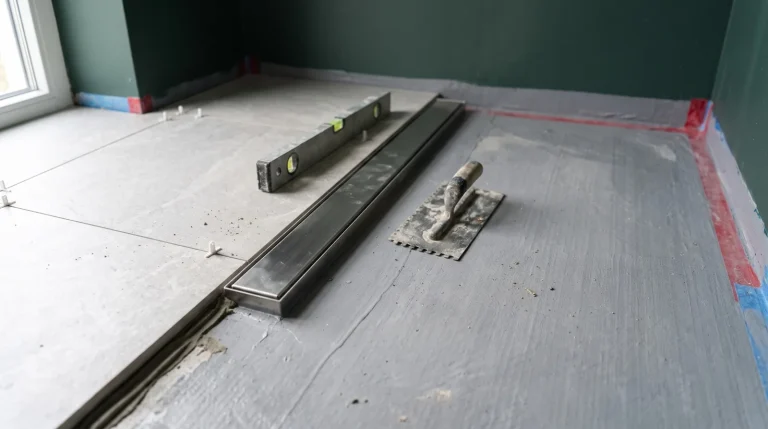
- In-wall: concealed within the wall; stylish, but requires a thicker wall structure.
Proper planning and installation of a shower play a decisive role in achieving the desired features. A linear drain is one of the key elements that influences the aesthetics and functionality of a shower. The classification of drains into groups, such as floor-mounted, wall-side and in-wall, provides a range of options to choose from, taking into account individual preferences and spatial constraints.
Floor drain
Floor drains are a popular choice in modern showers. They are positioned in the centre of the shower floor, creating a cohesive look. They have a flat profile and are usually flush with the floor surface. This solution fits perfectly with a minimalist design, whilst also making it easier to keep the area clean and ensuring effective water drainage.
Wall-side drain
Wall-side drains are fitted against the shower wall. They offer an attractive solution, particularly when the shower is situated in a corner of the bathroom. They can be discreet and subtly integrated into the wall, or create an interesting visual accent, adding character to the shower.
“Wall-side drains combine the advantages of in-wall and floor drains, whilst minimising their disadvantages.”
In-wall drain
In-wall drains are an innovative option that works perfectly in more unconventional bathroom designs. Installed directly into the shower wall, they allow water to be drained away effectively and discreetly. This modern approach not only adds a fresh touch to the bathroom but also gives it a unique character.
A comparison at a glance
| Floor-mounted | wall-side | in-wall | |
|---|---|---|---|
| Installation location | Centre of the shower area | At the edge of the wall | In the wall, above the floor |
| Floor slope | On several sides | In one direction | In one direction |
| Installation | Straight | Straight, swivel trap | Requires a thick installation |
| Best for | Large showers | Small and medium-sized bathrooms | Unique bathroom designs |
10 advantages of the Aqua Uno wall-side drain
One example of such a solution is the Aqua Uno wall-side drain. Its main advantages are:
- 01Space optimisationInstallationalong the edge of the wall allows for the effective use of available space, which is particularly valuable in smaller bathrooms where every centimetre counts.
- 02Material selection: Top-grade AISI 304 stainlesssteel, with excellent anti-corrosion properties, ensures many years of use without worrying about the drain wearing out.
- 03Aesthetics: The drain under the wall edge ensures a neater appearance for the shower, without the traditional drain in the centre of the floor.
- 04Minimalist designItintegrateseasilywith the bathroom's design, giving it a minimalist and modern feel.
- 05Waterproofing and sealingThe drainis 100% watertight thanks to high-quality welds, which guarantee no water leakage between the tiles.
- 06Tile-in optionA tileset into the panel creates a seamless whole with the rest of the bathroom, which will be appreciated by those who value a modern and cohesive look.
- 07Elimination of barriersBeneficialfor people with reduced mobility, as it eliminates the obstacles associated with traditional floor drains.
- 08Ease of cleaningIt isjust as easy to keep clean as floor drains, which makes shower maintenance simpler.
- 09SafetyIt minimiseswater pooling in the centre of the shower, preventing slips and falls.
- 10Easier installationThe swiveltrap makes installation in the shower tray much easier and quicker than with a standard trap.

Summary
Wall-side drains, such as Aqua Uno, are an excellent solution combining the advantages of various types of drains. Their modern design, functionality and design flexibility make them an excellent choice for both small and larger bathrooms. It is worth bearing this in mind when planning your dream shower.